
University of St Andrews – Neuroscience Research
Neuroscience at St Andrews is defined by its distinctive genes-to-behaviour approach. Primarily anchored in the School of Psychology and Neuroscience, where the research ethos explicitly spans from cells to minds to groups, St Andrews’ Neuroscience is fundamentally interdisciplinary. Neuroscience teaching includes a dedicated undergraduate degree and postgraduate programmes, alongside embedded neuroscience content within subjects, primarily Biology and Medicine. St Andrews’ cutting-edge Neuroscience research not only advances fundamental knowledge but also identifies mechanisms and therapeutic targets for neurological and psychiatric conditions.
The Institute of Behavioural and Neural Sciences (IBANS)
The Institute of Behavioural and Neural Sciences (IBANS) serves as our central collaborative hub, fostering progress at the interfaces of behavioural and neural sciences. It brings together colleagues from the Schools of Biology, Psychology & Neuroscience, Medicine, Chemistry, Computer Science, Physics & Astronomy, and Economics to address complex neuroscience questions across scales. Research spans cellular and molecular levels (such as neuron and glia function) to cognitive and evolutionary perspectives (such as comparative cognition and brain evolution). St Andrews also hosts unique, world-leading specialised centres: the Living Links to Human Evolution Research Centre and the Budongo Research Unit. Operated as field stations at Edinburgh Zoo in partnership with the Royal Zoological Society of Scotland, these facilities enable direct observation and experimentation on primate cognition and behaviour. Together, this breadth and integration mean St Andrews is a leading centre for neuroscience translating discoveries into impactful insights and real-world outcomes.
Links
School of Psychology and Neuroscience Website: https://www.st-andrews.ac.uk/psychology-neuroscience/
School of Biology Website: https://www.st-andrews.ac.uk/biology/
School of Medicine Website: https://www.st-andrews.ac.uk/medicine/
IBANS Website: https://ibans.st-andrews.ac.uk/
Living Links Website: https://ibans.st-andrews.ac.uk/
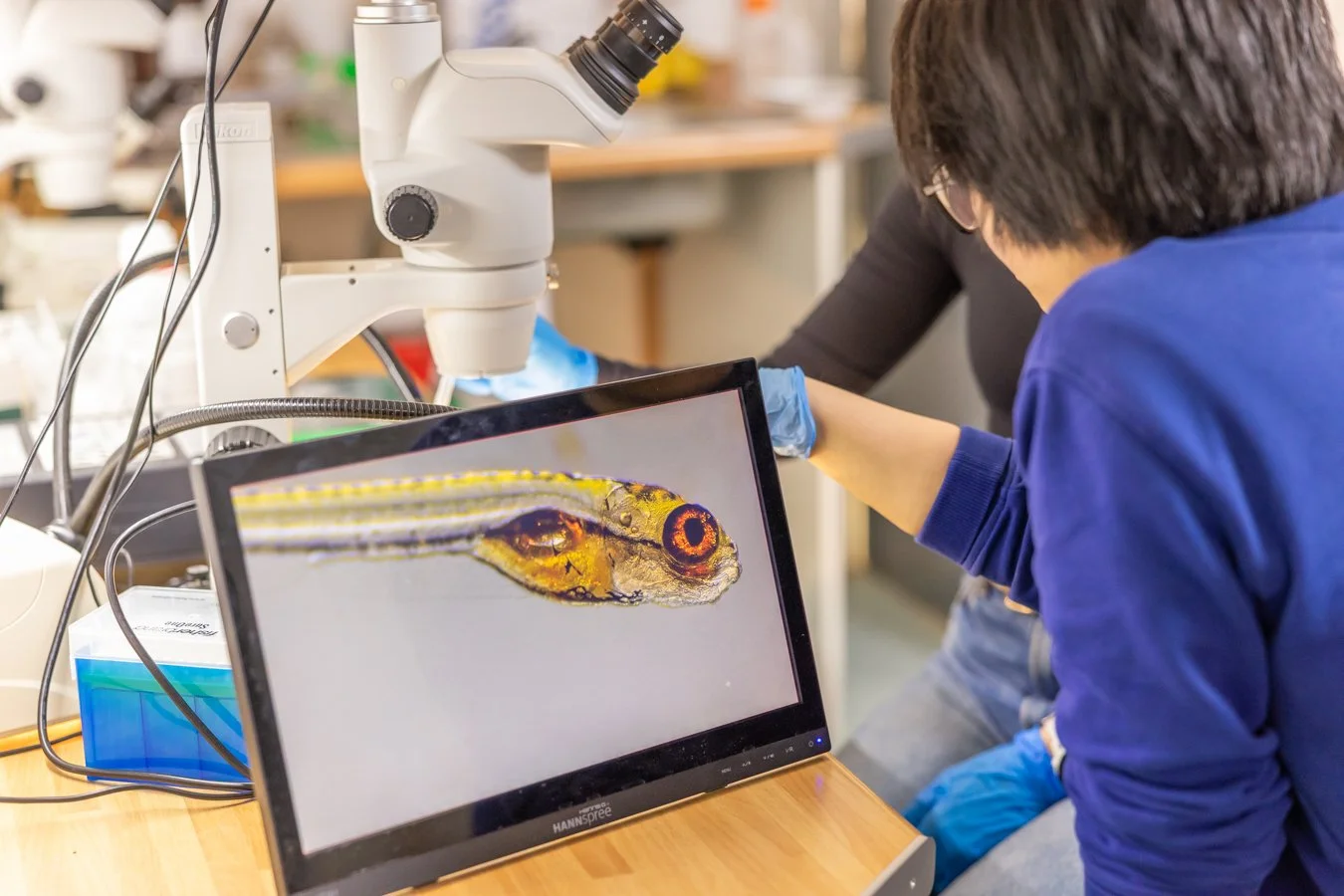
SNG representative at University of St Andrews