University of Dundee – Neuroscience Research
There is a highly active neuroscience research community at the University of Dundee, which is spread across investigators in the School of Medicine, Life, Psychology and beyond. Whilst neurodegenerative diseases is a core focus across the university, additional themes are also actively researched including neuropsychiatric disorders, pain and sensory processing.
School of Life Sciences – MRC-PPU ( with associated neuroscience)
Current research groups include
The Auditory Brain Lab, led by Dr Anne Keitel, investigates the neural underpinnings of speech, music and rhythm processing. A particular focus is on how individual differences in the oscillatory organisation of the brain influence cognition. We use EEG, MEG, eye tracking and psychophysical measurements in our research.
The Dynamic Vision and Performance Lab (dvplab), led by Dr Christian Keitel, is part of the Psychology division. Its cognitive and systems neuroscience approaches focus on how large-scale brain activity gives rise to visual perception, and multisensory integration, and how these processes are modulated by attention and arousal.
The Findlay lab, led by Dr Greg Findlay, investigates how disrupted signal transduction causes intellectual disability. They apply cutting-edge chemical, genetic, proteomic and transcriptomic technologies in stem cell and animal models to pinpoint novel signalling pathways that are mutated in intellectual disability patients and elucidate the molecular mechanisms underpinning the development of these disorders.
The Henstridge lab, led by Dr Chris Henstridge, is trying to understand the convergent mechanisms across neurodegenerative disease, with a particular focus on Motor Neuron Disease (MND) and Frontotemporal Dementia (FTD). The lab uses high-resolution 3D synaptic imaging and powerful unbiased proteomics technologies to unravel the anatomical and molecular changes at the synapse, a convergent site of vulnerability.
The Jackson lab, led by Dr Rosemary Jackson, investigates how rare APOE variants influence Alzheimer's disease risk. Using iPSC-derived cells, in-house assays, and biochemical approaches, they study how these variants alter protein structure, reduce amyloid plaques, and decrease neuroinflammation, with the goal of developing APOE-targeted therapeutics.
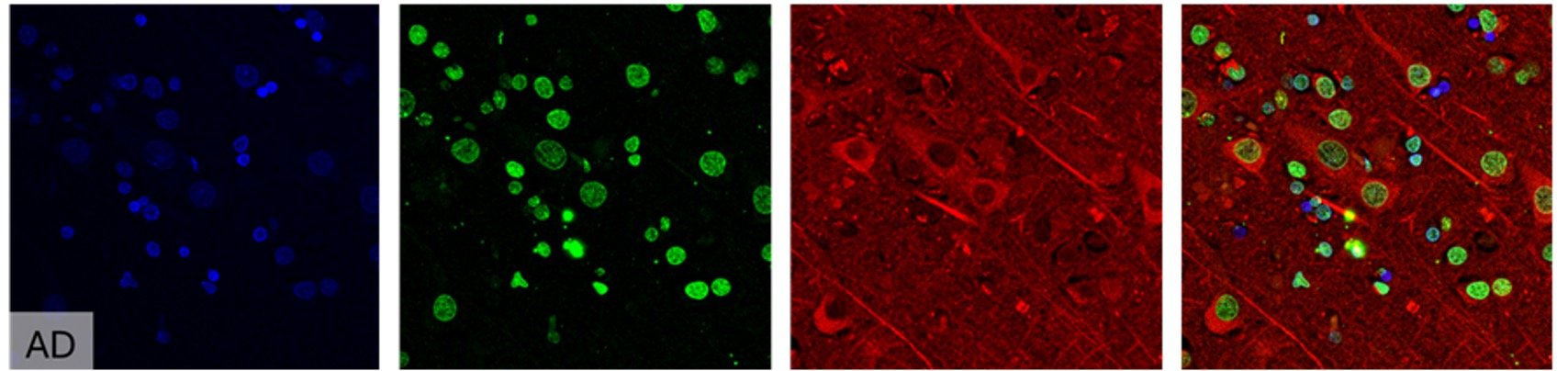
The Koss lab, led by Dr David Koss, is focused on determining the contribution of DNA damage and dysregulated DNA damage repair in the development and progression of neurodegenerative diseases. The team predominantly uses post-mortem human tissue combined with biochemical, immunohistochemical and proteomic techniques to establish detailed tissue characterisation, which is subsequently modelled in a variety of cell models.
The Martin lab, led by Dr Stephen Martin, explores the behavioural neuroscience and physiology of brain circuits underlying rodent memory formation, motivation, and mood. This includes the antidepressant and memory-modulating effects of novel drugs that target hippocampal GABAA and AMPA receptors. The goal is to uncover novel therapeutic pathways for treating neuropsychiatric disorders and cognitive impairment.
SNG representative at University of Dundee